Frequently Asked Questions
What are the dog bite laws in Massachusetts and New Hampshire?
Massachusetts and New Hampshire both have strict liability laws, which means the owner is responsible for damages caused by their dog regardless of the dog’s history or temperament. Unless a victim was violating trespassing laws at the time or actively provoking the dog, they can pursue legal action to recover damages. Under Massachusetts law, if a child under the age of seven is attacked, it is always assumed they are not at fault for the dog bite.
Get more info:
What are the different types of dog bites?
Dogs attack people in numerous ways. Sometimes, a dog may attempt to warn an individual by biting only their hand, and in other cases, the dog attacks viciously and victims may end up with serious injuries all over their body. Often, the type of injuries vary and can be based on a number of factors, including whether or not the dog was familiar with the victim or how well the victim was able to protect themselves from the attack.
Get more info:
How often do dog bites happen?
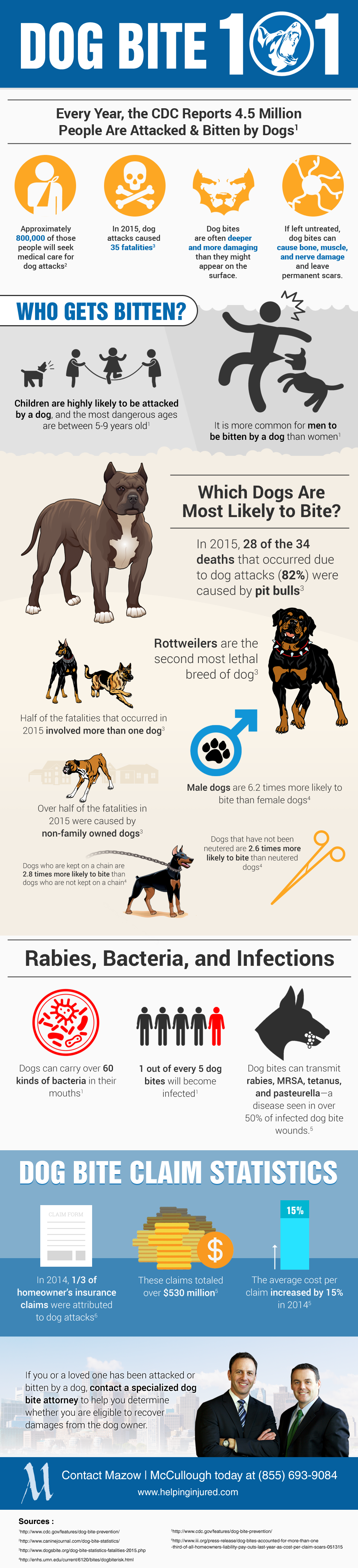
Each year in America, there are more than 4.5 million incidents of dog bites and attacks. One in five who are bitten require medical attention for their injuries due to infection, with half of those seeking medical attention being children ages 5 to 9.
Get more info:
How are dog bites treated?
How a dog bite gets treated depends on the severity of the bite and the surrounding tissue damage. Often, dog bites can appear less severe than they really are, especially in the case of puncture wounds. If you do not know for certain that the dog is not carrying rabies, regardless of the severity of the bite, you will likely need to receive injections to prevent the disease from developing.
Depending on your injuries, you may need stitches, pain relief, reconstructive surgery, occupational therapy, and even counseling.
Depending on your injuries, you may need stitches, pain relief, reconstructive surgery, occupational therapy, and even counseling.
Get more info:
What are the complications related to dog bites?
After a dog attack, victims face primary injuries such as cuts and bruises, but they may also face complications from their injuries. That can include infections, rabies, and other physical issues, but it can also include emotional distress such as developing post-traumatic stress disorder after the attack. Complications can cause a bad situation to turn worse, and often, fatalities are caused by these complications instead of the actual attack wounds themselves.
Get more info:
Are some dogs more dangerous than others?
All dogs have the potential to be dangerous, especially if they live on the property but are not treated as a family dog. Worldwide, dogs kill more people annually than assassin bugs, tsetse flies, roundworms, crocodiles, tapeworms, hippopotami, elephants, lions, wolves, and sharks combined. The majority of those deaths are related to rabies.
Get more info:
How many people die due to dog attacks?
According to the Centers for Disease Control, there are about 18 deaths due to dog bites every year. Although many breeds are involved in these attacks, pit bulls are responsible for the highest number of deaths. Children and infants tend to be disproportionately affected.
Get more info:
Why are children more affected by dog attacks than adults?
When children are involved in a dog attack, the injuries tend to be much more extensive. This is often due to the small stature of children and their inability to protect themselves during the attack.
Get more info:
What if I don’t know the owner of the dog that bit me?
If you were bitten by a stray dog, it may be difficult to get information about the animal’s owner. You may be able to contact your local animal shelter or humane society to see if they have a record on the dog, or ask homeowners in the area if they know who the dog may belong to.
Get more info:
How can I prevent dog bites?
If you believe that a dog you know or own is becoming aggressive, it is recommended to try calmly defusing the situation by giving the dog as much space as possible and time to calm down. You should never approach and unknown dog nor do anything that might provoke a dog, such as making sudden movements, yelling or screaming at the animal, or making eye contact with a wild or aggressive dog. It is recommended to teach dog safety to your children and to exercise good judgment when letting them interact with dogs.
Above all, remain calm. Panicking or reacting aggressively can easily provoke the dog to attack you. If you believe an attack is imminent, slowly raise your hands to your neck with your elbows in. Dogs will typically aim for major veins and arteries in the neck, and so protecting it from bites is vitally important.
Get more info:
What if I was bitten by my neighbor’s dog?
Getting attacked by your neighbor’s dog can create a complex situation between you and your neighbor. Regardless of your neighbor’s feelings towards you or the attack, you shouldn’t have to shoulder the cost of medical care and time off work on your own. Filing a dog bite lawsuit can help you get the compensation your family needs to move forward.
Get more info:
What happens if I was bitten by a dog while I was at work?
Being at work when you are attacked by a dog can complicate a case, especially if you work with dogs regularly. The dog bite lawyers at Mazow | McCullough, PC are well equipped to help. We can determine who may be responsible for the attack and how workers’ compensation insurance may be involved.
Get more info:
Who pays for dog bite damages when I sue the owner?
Usually, the person who owns the dog has homeowners or renters insurance that will cover the cost of medical bills and other expenses related to the attack, up to certain policy limits.
Get more info:
How do I choose the right dog bite attorney?
When you decide to bring forward a lawsuit for a dog attack, you need the right dog bite attorney. That means finding someone with extensive experience in personal injury law in general and dog attacks in particular. You also want someone who can give your case the attention it deserves.
At Mazow | McCullough, PC, we have extensive experience in dog bite cases and we can answer your questions and provide you with a case evaluation. We will thoroughly evaluate your case to determine the best strategy and will aggressively champion for your right to receive the full and fair compensation you deserve for your pain, suffering, and hardship.
Get more info: